


January-February 2009 ESIP Journal
|

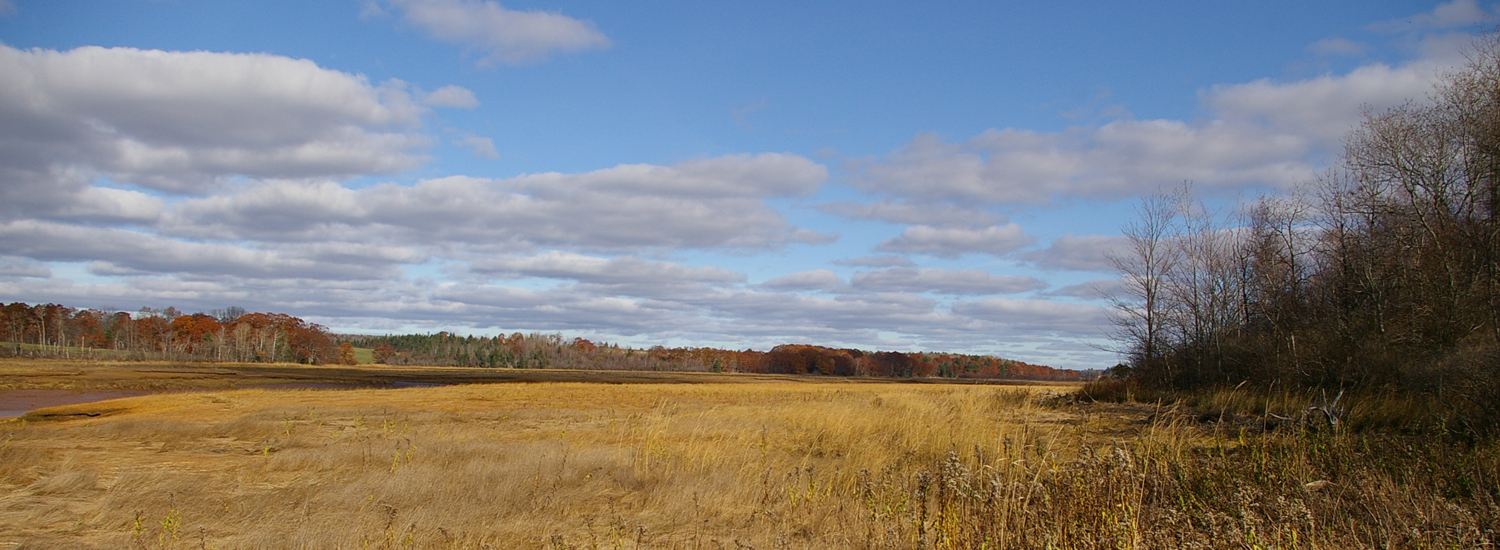
James Sulikowski, an assistant professor at the University of New England, reports on sampling efforts to investigate the fish community within the Saco River estuary system and adjacent waters.
This on-going project was initiated in the fall of 2006, and has served as a spring board for several undergraduate research projects. Dr. Sulikowski and his students have used a variety of methods to sample the Saco River area in Maine, using beam trawls, otter trawls, beach seines, gillnets, and ichthyoplankton nets.
To date, this research has yielded some surprising results. So far, fifteen species of larval fish, including cusk, which is a species of concern, and harvest fish, which is rare for this area, have been important finds in the ichthyoplankton surveys. Likewise, the surveys for macro fauna have also yielded interesting results. So far over twenty species have been identified within the estuarine portions of the river. These include Atlantic sturgeon, smelt, and blueback herring which are all considered species of concern. Even more interesting is the fact that all species captured to date have been juveniles, which suggests this geographic area may play an important role as a nursery ground.
Sulikowski s research is an important contribution to the efforts of the Gulf
of Maine Council. In Action Goal 1 (Coastal and marine habitats are in a
healthy, productive and resilient condition), the Council specifically focuses upon habitat restoration. The Council emphasizes habitats damaged by past human activities can be restored so they contribute to a properly functioning ecosystem.
What remains to be done? Dr. Sulikowski plans to continue this monitoring study for as long as possible. In addition, an acoustic array will be deployed in order to track the movement patterns of Atlantic sturgeon within the lower Saco River Watershed. This, along with deciphering the biotic and abiotic factors that are contributing to the nursery area, will keep Dr. Sulikowski and his students busy for quite some time. For more information, contact Dr. James Sulikowski at jsulikowski@une.edu.
Other News in the Gulf of Maine & Bay of Fundy
Past Journals
 Febuary 2015 — ESIP releases new smartphone app connecting people in the Gulf of Maine and watershed to the science happening all around them.
November 2015 — The launch of a marine debris program in the Bay of Fundy.
September 2015 — Climate Change Products for Atlantic Canada.
July 2015 — An update from the April 2015 State of the Bays Symposium in Massachusetts.
June 2015 — Learn about NH Department of Environmental Services' work with 65 volunteers to improve beach grass coverage at Hampton Beach State Park.
May 2015 — Nova Scotia recently released risk ratings for storm serge and sea level rise for all portions of the Province - this journal summarizes the findings
April 2015 — Learn about an exciting project between ESIP and EPA that seeks to unravel upstream pressures on downstream estuaries
February 2015 — Meet the new Project Leader for the Gulf of Maine Coastal Program in Falmouth, Maine - Jed Wright.
January 2015 — New Smart Tour of Great Marsh - largest continuous stretch of salt marsh in New England, extending from Cape Ann in Massachusetts to New Hampshire
December 2014 — The American Lobster Settlement Index is an important project that assesses current lobster fishery condition in both Canada and the US. The dataset is current and available through the ESIP Indicator Reporting Tool
Click here for all past ESIP journals