

December 2012 ESIP Journal
The New England Ocean Science Education Collaborative
What on earth do ocean scientists, informal educators, schoolteachers, and resource managers have to share with each other? As it turns out — an ocean full of data and experiences.
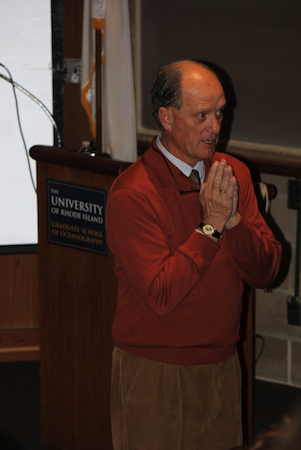
Caption: Ocean Literacy Summit keynote speaker Dr. Robert Ballard emphasized the importance of inspiring a new generation of ocean explorers. Photo by Maureen DeWire.
In early November, the New England Ocean Science Education Collaborative (NEOSEC) brought more than 165 people to the University of Rhode Island’s Narragansett Bay Campus for its 4th biennial Ocean Literacy Summit. With a focus on Ocean Literacy Principle 7, “The ocean is largely unexplored,” this year’s Summit was an opportunity for formal and informal educators, ocean scientists, and policymakers to make connections. To demonstrate the power of collaboration and communication among professionals in these sectors, all of the concurrent sessions featured scientists and educators as co-presenters.
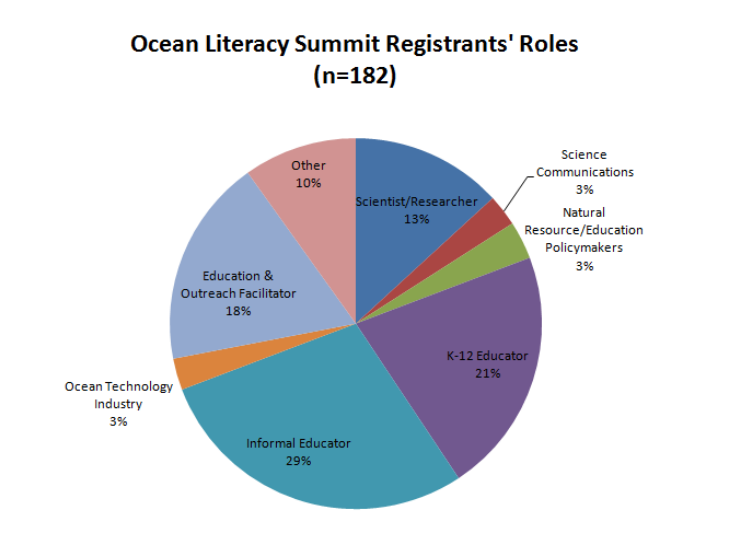
Summit registration prompted attendees to describe their role relative to ocean science education and research.
Via an evaluation survey, attendees report that their favorite aspects of the Summit were:
- “…reconnecting with contacts from other organizations and learning how ocean science topics are tackled throughout the New England region.”
- “…that scientists were co-presenting with educators.”
- “…integration of so many disciplines (academic, tech, research, etc) all in one place.”
Even the 2012 Summit sponsors — NOAA, Northeastern Regional Association of Coastal Ocean Observing Systems, Maine Coastal Program, URI’s Graduate School of Oceanography, and the New England Aquarium — reflect the diversity of contributions to the effort.
A solid foundation for collaboration
Since its inception in 2005, NEOSEC has been bringing together scientists, educators, and decisionmakers to advance ocean literacy in the region. The Collaborative’s strength is that it recognizes the importance of science and education research and practice:
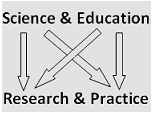
The result? Region-wide programs that leverage this connection: citizen science by teenage summer campers, training for teachers in leading field experiences, opportunities for families to explore the shore together, and workshops and pilot projects demonstrating best practices for scientist-educator partnerships.
Opportunities on the horizon
The Summit immediately sparked new ideas and partnerships — which will result in more opportunities for teachers, scientists, and decisionmakers to connect and work together. Coming in 2013: a second workshop in April 2013 on best practices for broader impacts, this time at the Seacoast Science Center in Rye NH; a workshop for teachers on drifter buoy construction; and training on the Census of Marine Life’s NaGISA protocol for citizen science efforts. Subscribe to NEOSECe’s e-newsletter, NEwswave to receive notices about these opportunities. For more general information about NEOSEC, contact Pam DiBona (pdibona@neaq.org).
Other News in the Gulf of Maine & Bay of Fundy
Past Journals
 Febuary 2015 — ESIP releases new smartphone app connecting people in the Gulf of Maine and watershed to the science happening all around them.
November 2015 — The launch of a marine debris program in the Bay of Fundy.
September 2015 — Climate Change Products for Atlantic Canada.
July 2015 — An update from the April 2015 State of the Bays Symposium in Massachusetts.
June 2015 — Learn about NH Department of Environmental Services' work with 65 volunteers to improve beach grass coverage at Hampton Beach State Park.
May 2015 — Nova Scotia recently released risk ratings for storm serge and sea level rise for all portions of the Province - this journal summarizes the findings
April 2015 — Learn about an exciting project between ESIP and EPA that seeks to unravel upstream pressures on downstream estuaries
February 2015 — Meet the new Project Leader for the Gulf of Maine Coastal Program in Falmouth, Maine - Jed Wright.
January 2015 — New Smart Tour of Great Marsh - largest continuous stretch of salt marsh in New England, extending from Cape Ann in Massachusetts to New Hampshire
December 2014 — The American Lobster Settlement Index is an important project that assesses current lobster fishery condition in both Canada and the US. The dataset is current and available through the ESIP Indicator Reporting Tool
Click here for all past ESIP journals