




May 2015 ESIP Journal
Nova Scotia Municipal Climate Change Action Plans: Update
It has been a year since municipalities in Nova Scotia submitted their Municipal Climate Change Action Plans (MCCAP) to the province’s Department of Municipal Affairs (DMA). The MCCAPs were a requirement under the 2010 – 2014 Canada – Nova Scotia Gas Tax Agreement. While municipalities have been busy undertaking adaptive measures through the implementation of their individual plans, the DMA has prepared a MCCAP Summary Report which consolidates the information from within each plan into a single document.
The purpose of the MCCAP Summary Report is two-fold. It organizes and amalgamates the information from 53 individual municipal plans into themes that allow a province-wide, bird’s-eye-view of the state of climate change and climate change adaptation in Nova Scotia. Additionally, information from the report will also serve to inform the provincial government’s next steps, in terms of supports, programs and initiatives to facilitate and promote adaptation at the local level.
One of the immediate benefits of the MCCAP analysis findings is that the plans confirm by way of locally documented experience and data what has been known anecdotally for the past decade: climate change poses a very real threat to the management and wellbeing of communities and municipalities. The significance of this simple conclusion cannot be underestimated, because prior to the MCCAPs, it was difficult to know the precise ways that climate and weather was impacting communities. Now the provincial government is able to utilize the MCCAP information to confirm and better understand the scale and scope of weather-related problems and damages experienced by municipalities.
Another important finding that has emerged from the analysis of the plans relates to the prevalence of shared experience among municipalities, and the widespread occurrence of common problems and issues, regardless of the geographical location of any particular municipality within the province. This was an unexpected outcome, because strong regional themes were expected to appear and influence the types of issues experienced by communities. This finding is also helpful because it means that adaptation measures can be broadly applied throughout the province, and local levels of governments can share best practices and other adaptation methods that work well in a local context.
The overall conclusion is that the MCCAP process has had a positive effect, and that the information within these plans will continue to move both the provincial and municipal levels of government in Nova Scotia forward, so that over time Nova Scotia builds the capacity to effectively address climate change.
Other News in the Gulf of Maine & Bay of Fundy
Past Journals
 Febuary 2015 — ESIP releases new smartphone app connecting people in the Gulf of Maine and watershed to the science happening all around them.
November 2015 — The launch of a marine debris program in the Bay of Fundy.
September 2015 — Climate Change Products for Atlantic Canada.
July 2015 — An update from the April 2015 State of the Bays Symposium in Massachusetts.
June 2015 — Learn about NH Department of Environmental Services' work with 65 volunteers to improve beach grass coverage at Hampton Beach State Park.
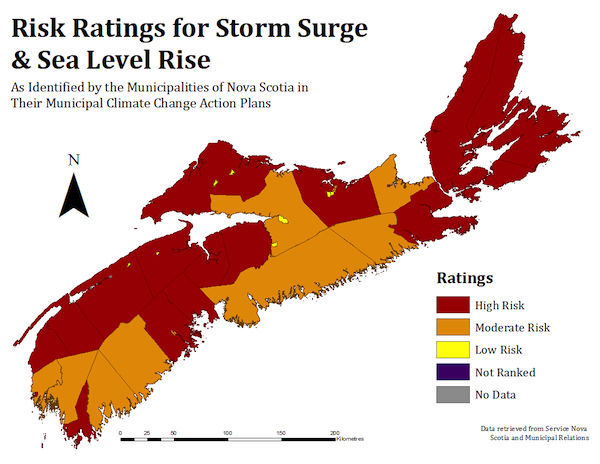
May 2015 — Nova Scotia recently released risk ratings for storm serge and sea level rise for all portions of the Province - this journal summarizes the findings
April 2015 — Learn about an exciting project between ESIP and EPA that seeks to unravel upstream pressures on downstream estuaries
February 2015 — Meet the new Project Leader for the Gulf of Maine Coastal Program in Falmouth, Maine - Jed Wright.
January 2015 — New Smart Tour of Great Marsh - largest continuous stretch of salt marsh in New England, extending from Cape Ann in Massachusetts to New Hampshire
December 2014 — The American Lobster Settlement Index is an important project that assesses current lobster fishery condition in both Canada and the US. The dataset is current and available through the ESIP Indicator Reporting Tool
Click here for all past ESIP journals